
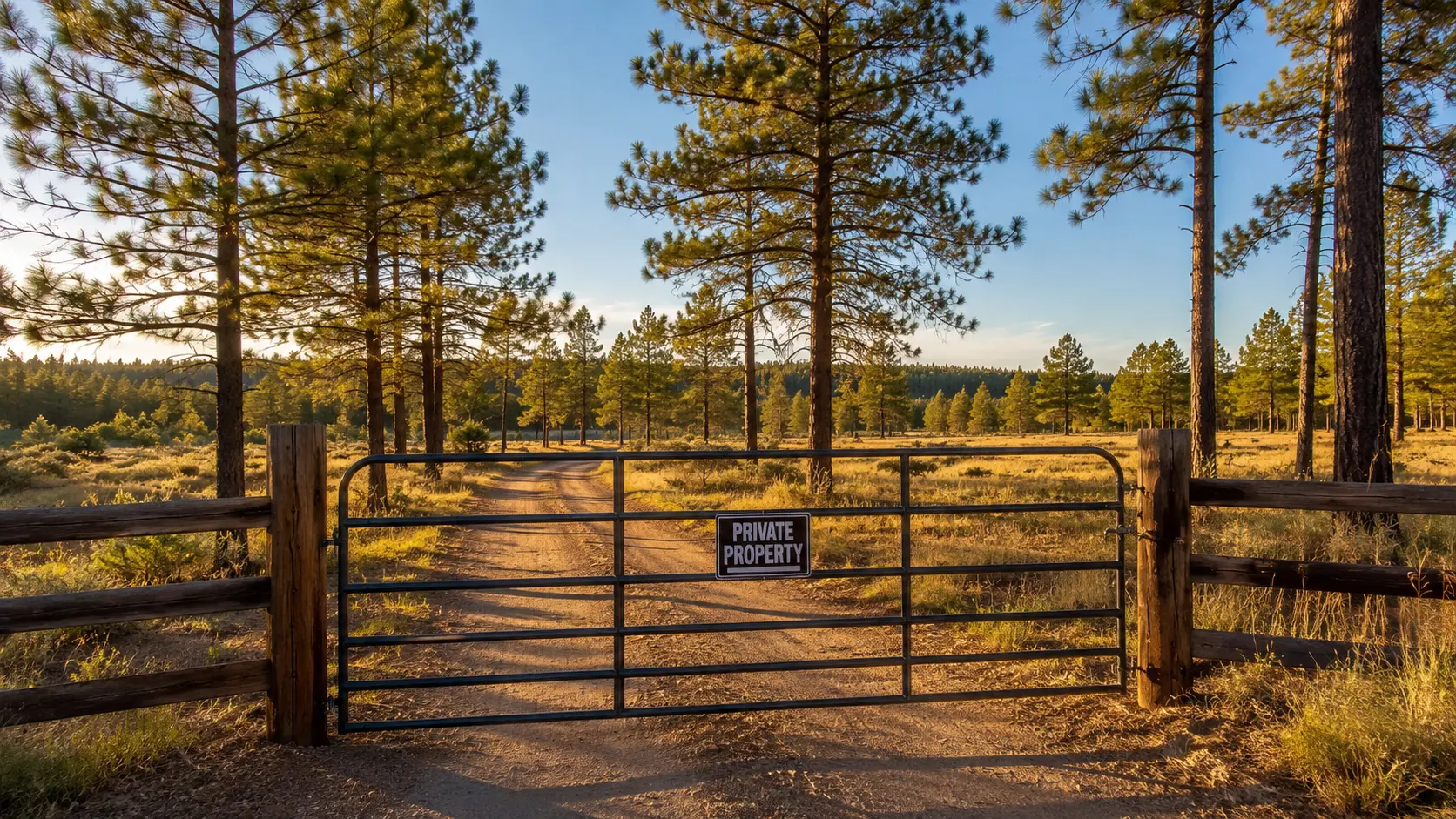
Not every property with an access challenge is a problem to avoid. For buyers who know how to look at these situations, access limitations can represent real opportunities.
We have watched buyers walk away from strong properties over access questions that were actually solvable. We have also watched others do the research, find workable solutions, and build significant equity in the process. The difference is almost always how much homework they did before deciding.
The Privacy Angle That Most Buyers Miss
Properties behind gates or down unmaintained roads often trigger hesitation in buyers. That is understandable. But once those buyers become owners, something shifts.
The same barriers that made the property hard to visit become the thing they value most. The difficult access is exactly what keeps other people out. Privacy and seclusion are what they were looking for all along.
There is also a financial angle. Installing gates and fencing on a property from scratch can cost anywhere from $3,000 to $10,000 or more depending on terrain and length. When you buy a property that already has this infrastructure, you are getting those benefits without paying separately for them. Someone else absorbed that cost.
Due Diligence That Actually Protects You
Before assuming an access limitation is a dealbreaker, do the research.
Start with title work. Standard title insurance often excludes access issues, so ask specifically about access endorsement coverage. Look at the chain of title for all properties that the access route crosses. Look for historical easement documentation going back as far as you can.
Then visit the property in person, more than once if possible. Go in the best conditions and go in the worst conditions. Bring the actual vehicle you would use to access the land regularly. Take photos and GPS coordinates at every significant point along the route.
Talk to people with local knowledge: county road maintenance officials, neighboring landowners, the county assessor's office. Local delivery drivers in rural areas often know which roads become impassable in rain. That kind of information does not show up in any listing.
Creative Solutions That Create Value
When access is not ideal but is workable, buyers have several options.
Negotiating a formal easement with neighboring property owners, sometimes for cash, sometimes in exchange for reciprocal access arrangements. Purchasing a narrow strip of land that connects your parcel to a public road, creating direct road frontage where none existed. Setting up shared maintenance agreements with other landowners who use the same access route.
None of these solutions are complicated. All of them require some research and negotiation. And all of them tend to increase property value immediately.
What the Numbers Look Like
Properties with clearly documented, convenient access command significantly higher prices than comparable parcels with access limitations. The spread can be 30% to 50% or more depending on the severity of the issue and the specific market.
That spread works in both directions. If you buy at the lower price and solve the access problem, the value increase tends to be immediate. The return on investment for access improvements, whether road grading, easement negotiation, or gate installation, often exceeds what you spend by a wide margin.
We have seen this play out consistently across our Arizona, Nevada, and New Mexico markets, where access questions come up regularly.
When to Walk Away
Not every access situation is solvable. If legal access is genuinely in dispute, involves ongoing litigation, or would require cooperation from a neighboring owner who is not willing to engage, the risk may outweigh the opportunity.
The goal is not to force a deal. It is to understand what you are looking at clearly enough to make the right call for your situation.
If you are looking at a property with access questions and want a second perspective, reach out. We know the access patterns in our markets well and can help you assess whether a situation is workable before you commit.
Browse our listings across Arizona, Nevada, New Mexico, and Colorado.